

Julian Drago
Stanford GSB · Business Scaling Program
Program University of Buenos Aires · Public Accounting
Date published:
March 12, 2025
Last updated:
August 27, 2026
Reviewed by
Sebastián Mejía

Creating an LLC in the United States as a foreigner can be a useful option for entrepreneurs, freelancers, agencies, service businesses, and other companies looking to conduct business activities related to the U.S. market.
A person living in Mexico, Colombia, Argentina, Chile, Ecuador, Spain, or another country may, under certain circumstances, own a U.S. company without becoming a U.S. resident. However, forming the company does not automatically eliminate any tax, banking, or administrative obligations that may apply in the United States or in the country where the owner resides.
The structure of an LLC can offer flexibility in terms of ownership, management, and tax treatment. For federal tax purposes, this entity may receive different tax classifications depending on factors such as the number of members and any elections made by the entity.
Therefore, if you are considering forming a limited liability company from abroad, it is important to analyze the entire process, from choosing the state and preparing the required documentation to obtaining an EIN, understanding taxation, setting up business banking, and meeting the obligations that begin after the company is formed.
Yes. You do not need to be a U.S. citizen to own an LLC. This business structure can have one or more members, who may be individuals or other entities, depending on the applicable rules.
In addition, living outside the United States does not necessarily prevent you from forming a company there. The process will primarily depend on the state you choose, the characteristics of the business, and the obligations that may arise after its formation.
Not necessarily. An entrepreneur who lives outside the United States can form an LLC without establishing residency in the country.
This allows individuals who operate businesses from Latin America or Spain to have a U.S. business entity for certain commercial activities. However, owning this entity does not mean having U.S. tax residency or automatically changing the owner's tax situation.
Forming an LLC and obtaining authorization to enter, live, or work physically in the United States are separate matters.
A person can form a company without this meaning that they have immigration authorization to work physically in the United States. Therefore, foreign entrepreneurs should distinguish between their business structure and their immigration status.
An LLC can have one or more members. These may be individuals or certain entities, depending on the applicable rules.
In Texas, for example, official state documentation establishes that this entity can have one or more members, including individuals, partnerships, corporations, or other types of legal entities.
Yes. A person who lives outside the United States can be the sole owner of a U.S. LLC, provided they meet the applicable requirements.
However, the tax consequences of a single-member entity may differ from those of a structure with multiple owners. The IRS states that a single-member entity may be treated as a disregarded entity for federal income tax purposes unless a different tax election is made.
Before filing any documents, it is worth defining how the business will operate. Creating an LLC should not simply come down to choosing a name and paying a state filing fee.
The U.S. Small Business Administration (SBA) recommends carefully considering your business structure because it can affect matters such as taxes, personal liability, documentation, and access to financing.
First, you should determine what type of business you will operate.
Using an LLC to provide professional services is not the same as using one to run an online store, work with U.S. clients, develop software, or conduct activities that may require specific licenses.
Defining your business activity will later help you evaluate the state of formation, licensing requirements, banking, and tax obligations.
It is also important to determine whether the LLC will have a single owner or multiple owners.
A single-member business structure may receive different federal tax treatment from an entity with multiple members, so this decision can have consequences that should be evaluated before forming the company.
The state of formation determines some of the rules the business must follow.
You do not necessarily need to choose the state with the lowest initial filing fee. You should also consider ongoing maintenance costs, reporting requirements, state taxes, where you will actually conduct business, and the company's needs.
In addition to the formation fee, there may be expenses related to a Registered Agent, state reports, taxes, licenses, accounting, and other services.
For this reason, it is advisable to calculate both how much it costs to form an LLC and how much it may cost to keep this business structure active each year.
This point is especially important for foreign entrepreneurs. Forming an LLC in the United States does not mean that the tax or reporting obligations in your country of residence disappear.
Depending on your circumstances, you may need to determine how income, ownership interests in foreign companies, or international transactions must be reported.
There is no state that is automatically the best option for every foreign entrepreneur. The choice should be related to the company's activities, the location of its operations, costs, and the owners' needs.
Each state establishes its own procedures for forming and maintaining an LLC.
For example, an entity formed in Texas must file the Certificate of Formation and comply with the applicable state requirements. Texas also imposes a Franchise Tax on this type of entity, so the formation cost does not necessarily represent the total cost of operating there.
Florida, on the other hand, has its own state system for forming and maintaining business entities. The decision should take the overall set of obligations into account rather than focusing solely on the initial filing fee.
Texas may be an option for businesses conducting activities related to the state. It does not impose a state individual income tax, but LLCs may be subject to the Franchise Tax and other state requirements.
In addition, the state's official documentation establishes the basic requirements for forming this business structure and filing its Certificate of Formation.
Florida may also be considered by entrepreneurs conducting business activities there. The state has a Division of Corporations, known as Sunbiz, which handles various business-related filings and procedures.
The company must pay attention not only to the formation process but also to the reports and requirements necessary to keep its registration active.
Wyoming and Delaware are states that frequently come up in discussions about business formation, but that does not mean they are automatically the best options for every foreign entrepreneur.
A business should evaluate factors such as:
The answer depends on the business. If the company physically operates in a specific state, it may be more important to analyze that state's requirements than to choose a jurisdiction solely because of its business reputation.
Therefore, before forming an LLC from another country, it is advisable to compare costs, obligations, and the actual needs of the business.
.jpg)
Once you have made the initial decisions, the formation process can begin.
Although requirements vary by state, you will generally need to provide information about the business, appoint a Registered Agent, and file the documents required by the state authority.
The name must comply with the rules of the state where the LLC will be formed and generally must be distinguishable from other registered entities. Before using it commercially, it is also advisable to research potential conflicts with trade names or trademarks.
State approval of a name does not necessarily mean that its commercial use is free from other rights. Texas's own instructions, for example, warn that state acceptance of a name does not authorize its use in violation of third-party rights.
An LLC generally must have a Registered Agent in the state where it is registered. The agent's primary role is to receive certain official documents and legal communications addressed to the business.
For a foreign owner, this service can be particularly relevant because it provides a physical presence in the United States for receiving official communications.
The business is created by filing the document required by the state.
In many states, this document is called the Articles of Organization, while others use different names. Texas, for example, uses the Certificate of Formation for this type of business.
The required information may include the business name, Registered Agent details, and other information requested by the state authority.
The Operating Agreement establishes the internal rules of the business.
It can define matters such as:
Although requirements vary by state, clearly establishing these rules can help organize the business and reduce potential conflicts.
The Employer Identification Number (EIN) is a federal identification number used for certain tax and administrative purposes.
Whether it is necessary depends on the circumstances of the business. The IRS indicates that certain single-member LLCs may not need an EIN solely for federal income tax purposes, although they may need one for other reasons, such as having employees, certain tax obligations, state requirements, or banking needs.
In the case of this U.S. entity, when it is owned by a foreign individual and treated as a disregarded entity, there may also be specific reporting obligations, including certain situations involving Form 5472.
Once the business has been formed, it is advisable to keep the following documents organized:
Keeping this information organized makes administration easier and can be useful when a bank, financial institution, or government authority requests documentation.
A separate account for business transactions can make financial and accounting management easier.
However, opening a bank account as a foreign owner may involve additional verification procedures. Requirements vary by financial institution, so it is advisable to confirm them before selecting a provider.

The exact documents may vary depending on the state and the providers you use, but you will generally need to provide information related to the owners' identities and the business.
A foreign owner may need to provide a valid identification document, such as a passport, particularly during banking or verification processes.
You may also be asked to provide the owner's residential information and address. It is important to distinguish the owner's personal address from any address that may be used for specific business purposes.
The business must have information about its owners and, depending on its structure, the individuals authorized to manage it.
Among other details, you may be required to provide:
A financial institution may request additional information to verify the owner's identity, understand the business activity, and comply with its Know Your Customer (KYC) procedures.
Therefore, forming an LLC and opening a bank account are related processes, but they are not exactly the same.
The ability to create an LLC from abroad does not mean that the process and its consequences are the same for everyone. Forming a U.S. entity does not automatically eliminate the tax obligations you have in the country where you live and operate your business.
Although this structure in the United States offers flexibility, your country of residence has its own rules regarding how to report ownership interests in foreign companies and how income generated abroad is taxed. A common mistake is to assume that this entity "erases" your local tax responsibilities.
Before forming your business, it is essential to consult with a local accounting or tax professional and review the specific regulations of your tax authority:
Important: The owner's country of residence is a relevant factor, but it is not the only one. The business activity, income, ownership structure, state of formation, and tax residency may also affect the applicable obligations.
The taxation of an LLC is one of the aspects that requires the most attention when the owner lives outside the United States.
Not all entities of this type are taxed in the same way. Federal tax treatment may depend on the number of owners, the entity's tax classification, and certain elections made with the IRS.
A domestic LLC with a single member may be treated as a disregarded entity for federal income tax purposes.
In that case, this entity generally does not file a separate income tax return as a corporation simply because it is this type of business. Instead, certain income and expenses are reported according to the rules applicable to the owner.
When the owner is a foreign individual, additional reporting obligations may also arise.
An LLC with multiple members may receive different tax treatment.
Under certain circumstances, it may be treated as a partnership for federal tax purposes, although alternative classifications may be available when the applicable requirements are met.
Therefore, adding multiple owners can significantly change the tax and reporting obligations.
An LLC may, when eligible, elect certain tax treatments that differ from its default classification. Whether making such an election is appropriate will depend on the specific circumstances of the business and its owners.
Federal tax treatment is not the only factor that must be considered.
There may also be state or local taxes, fees, reporting requirements, and other obligations. Therefore, a business formed in one state may have different responsibilities from another business with a similar structure formed in a different state.
There is no single price for forming and maintaining an LLC.
The cost depends primarily on the state, the services you use, and the business's obligations.
The first expense is usually the state filing fee required to submit the formation documents.
If the owner does not have an individual or entity that can fulfill this role in the applicable state, they may hire a Registered Agent service.
Some states require periodic reports and may charge fees associated with maintaining the business.
Taxes will depend on the business activity, structure, state, and tax situation of the business and its owners.
An LLC may require accounting or professional services to prepare certain tax returns and reports.
There may also be costs associated with business bank accounts, payment platforms, administrative services, or tools used to operate the business.
For this reason, it is advisable to distinguish between the cost of forming a limited liability company and the cost of keeping this entity active.

Forming the business is not the end of the process. Once it has been created, you must keep it properly registered and comply with the applicable requirements.
The business must comply with the requirements of the state where it was formed. These may include periodic reports, fees, renewals, or other obligations.
Deadlines and requirements vary by state. Failure to comply may result in penalties or even affect the company's active status.
The business and its owners may have different responsibilities depending on the tax classification and where the income is generated.
In the case of certain foreign-owned U.S. limited liability entities, there may also be specific reporting obligations with the IRS.
Using separate accounts and records helps maintain clearer accounting and makes it easier to document business transactions.
Formation documents, internal agreements, financial records, and tax returns should be kept organized and readily available.
Federal requirements can change. One recent example is the modification of the Beneficial Ownership Information (BOI) rules announced by FinCEN on August 11, 2026. Currently, U.S. companies are exempt from filing BOI reports, while certain foreign companies registered to operate in the United States may remain subject to these requirements.
Therefore, you should not automatically apply outdated BOI information to a limited liability entity formed in the United States.
Forming a business without understanding its ongoing obligations can create administrative, tax, or financial problems.
This distinction is particularly important for entrepreneurs from Latin America and Spain.
An LLC is a business structure. It is not an immigration document. Forming a U.S. business does not automatically grant a visa or authorization to reside in the United States.
If a person wants to physically perform work in the United States, they must separately evaluate the applicable immigration rules.
A person can own a U.S. business while being a tax resident of another country.
Therefore, when evaluating an LLC for foreign entrepreneurs, it is important to analyze the following separately:
Not every business needs an LLC.
However, it can be an interesting structure for certain business models that work with U.S. clients or conduct international operations.
An LLC is not the only business structure available in the United States.
The SBA states that the choice of business structure affects matters such as taxes, personal liability, documentation, and the ability to obtain financing.
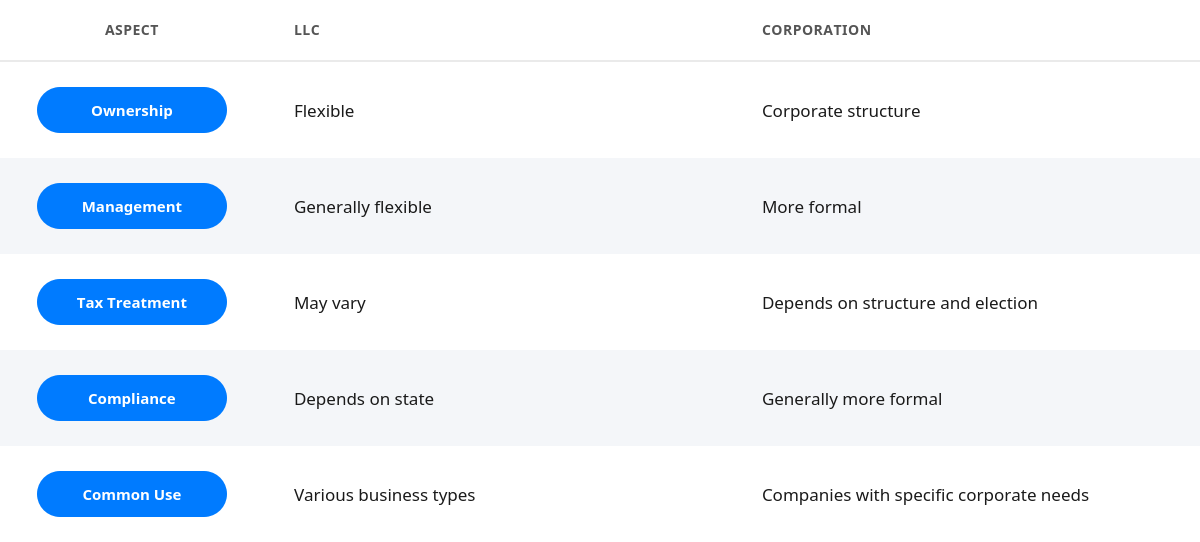
There is no universally better business structure. The choice should be made by considering the size of the business, its owners, planned investment, business activity, and tax needs.
Before getting started, you can use this list as a reference:
An LLC in the United States for foreign entrepreneurs can be an option for entrepreneurs from Latin America and Spain who want to develop businesses connected to the U.S. market. However, forming the company is only one part of the process.
The choice of state, ownership structure, Registered Agent, EIN, tax classification, banking, and ongoing obligations should all be evaluated before making a decision.
It is also important to understand that forming a limited liability company, complying with tax obligations, and obtaining authorization to live or work in the United States are separate matters.
For an entrepreneur living in Mexico, Colombia, Argentina, Chile, Ecuador, Spain, or another country, the appropriate structure will depend on their specific circumstances, type of business, and the obligations that may apply both in the United States and in their country of residence.
If you are considering creating a U.S. business entity from abroad, specialized guidance can help you organize the process and understand the applicable requirements. Openbiz can assist you with the creation and management of the different elements required to establish your business in the United States.
Yes. Living in Latin America does not automatically prevent you from owning a U.S. LLC. The specific requirements will depend on the state and the circumstances of the business.
Not necessarily. Whether you can complete the process remotely will depend on the state, the provider you use, and subsequent procedures, particularly banking.
There is no general requirement to have an SSN to own this entity. However, certain specific procedures may require different forms of identification.
Yes. This business structure can have a single owner, subject to the applicable rules.
Generally, this entity must have a Registered Agent in the state where it is registered, in accordance with applicable state rules.
Not all LLCs have exactly the same EIN requirements. Whether one is needed depends on factors such as the business structure, employees, certain tax obligations, state requirements, and other administrative purposes.
It may have tax or reporting obligations, but there is no single answer that applies to every LLC. The situation depends on the tax classification, business activity, income, and other factors.
It may be possible, but requirements vary by financial institution. Banks and financial providers may conduct additional verification for foreign owners.
No. Forming a business and obtaining immigration or employment authorization are separate matters.
These may include state reports, taxes, tax returns, Registered Agent maintenance, and other requirements depending on the state and the business activity.




Concierte una reunión virtual gratuita con nuestro equipo de expertos.
Programar una reunión
Compare precios y elija el plan ideal para su empresa.
Ver planos y precios